
How to Make a Dog Memory Box: What to Keep and How to Arrange It
After a dog dies, even the smallest things can feel impossible to put away: the tag that jingled on every walk, the toy they always carried, a photo tucked into your phone case. You may want these things close without knowing where they should go.
A dog memory box gives those pieces of their life a place of their own. It doesn't have to be elaborate or finished all at once. Start with the things you already know you want to keep, and let the rest wait.
Choose a box that fits the memories
A sturdy lidded box, small wooden chest, or fabric-covered photo box will work. Pick one with enough room for what matters to you, rather than trying to fill a large box. If you expect to store paper photographs or letters for years, look for an acid-free photo box and sleeves. Keep the box somewhere dry and out of direct sunlight.
You can leave it plain, or add your dog's name and a favorite photo to the lid. The box is for you, so it only needs to feel right to you.
What can you put in a dog memory box?
There are no required items. These are a few places to start:
- Their collar and ID tags. You can leave the tags attached or tuck them into a small pouch so they don't scratch photos.
- Printed photos. Include the ordinary ones, too: the sleeping pose you saw every day, the muddy walk, the face they made when dinner was late.
- A favorite toy or bandana. If an item is too big, a photo of it belongs in the box just as much.
- A paw print, a lock of fur, or a sympathy card. Store delicate keepsakes in their own envelope or container.
- A note about the little things. Write down their nicknames, favorite places, habits, and the stories you don't want to forget.
If a collar or toy still smells like your dog, you may want to keep it in a separate sealed bag for now. You can decide later whether it belongs in the box.
Put their story in the box, not just their things
Objects hold memories, but a few words can help you find them years from now. On a card, write how your dog came into your life. Add the names of the people and animals they loved, a favorite routine, or one moment that makes you laugh every time you tell it.
If writing a whole letter feels like too much, try a simple beginning: “I never want to forget how you...” You don't have to finish it today.
Arrange it so you can return to it
Place paper items in an envelope or photo sleeve, and keep heavier objects from resting on them. Label anything whose story might become less obvious with time: the pebble from a favorite trail, a hotel key from your last trip together, or the first tag they wore.
Some people keep their box private and open it only occasionally. Others leave it on a shelf next to a photograph. Both are okay. A memory box can also hold the pieces you aren't ready to display yet.
What if you can't sort through their things right now?
Then don't. Put the items you want to protect in one safe place and come back when you're ready. You can make decisions one object at a time. Keeping a toy doesn't mean you have to keep every toy; displaying a collar doesn't mean you have to give away the box.
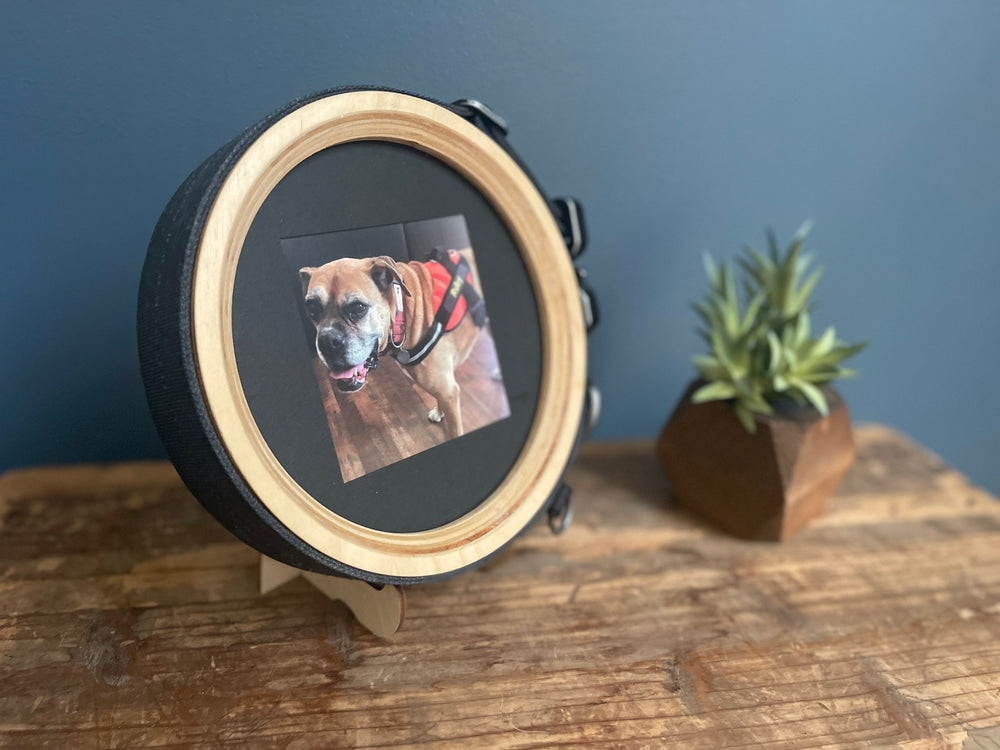
If you'd like one piece of their story where you can see it every day, you might display their collar alongside a favorite photo and keep the rest of their keepsakes in the box. Or start with the box and decide about a display later. Their memory doesn't depend on getting this “right.”
A dog memory box is simply a place for the things that still feel like them. Over time, you can add another photo, another story, or nothing at all. What you choose to keep is enough.


Leave a comment